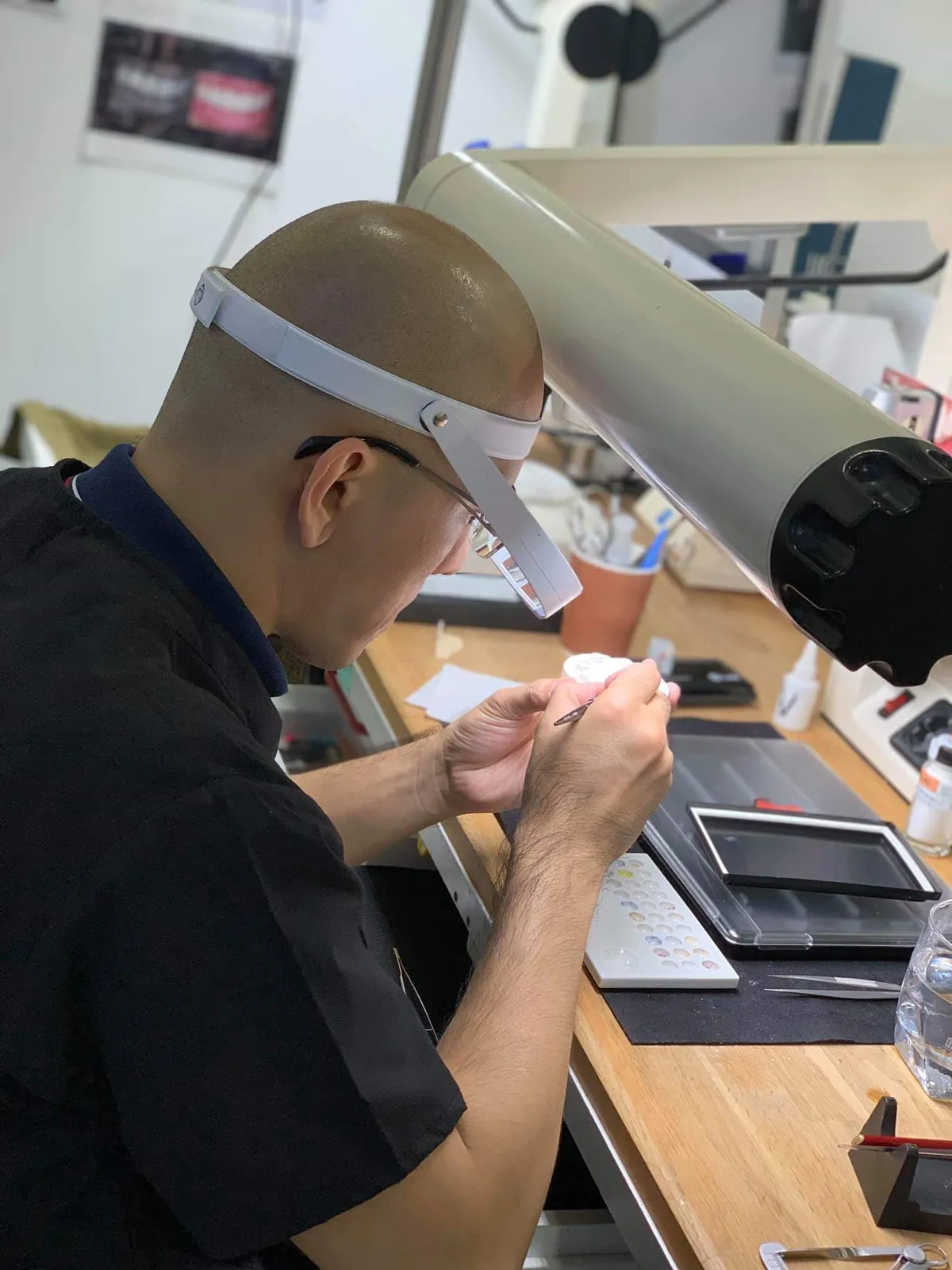
Ceramic restorations, anterior and posterior.
For dental practices in Singapore — on natural teeth and on implants, from impressions or intraoral scans.
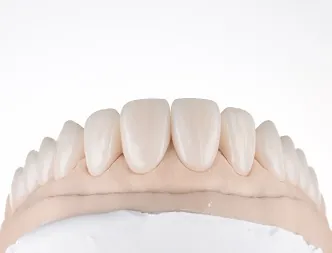
Ceramic veneers
Thin bonded ceramic for anterior cases, built in layers so that translucency and opalescence sit in the material rather than being painted onto it. Shade and contour are agreed before firing.
What we need from you: Impression or intraoral scan · shade photographs · opposing model
See the anterior work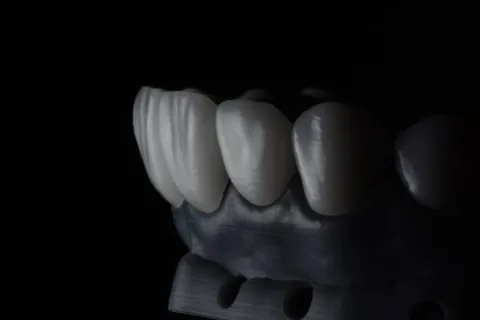
Crown & bridge
Single units through to full-arch reconstruction, anterior and posterior. Where strength has to lead we build monolithic; where the case is judged on appearance we layer. Fit and occlusion are verified on the articulated model.
What we need from you: Impression or scan · bite registration · opposing model · shade
See the crown & bridge work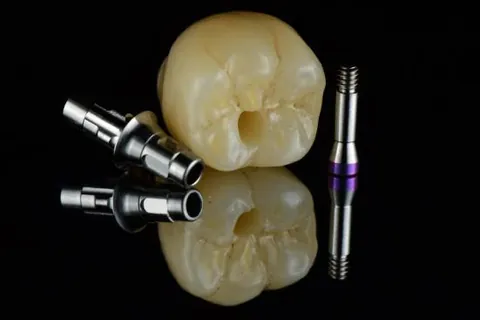
Implant restorations
Screw-retained and cement-retained restorations on the major systems, with emergence profiles shaped to the tissue. The fit between crown and abutment is decided at the bench, not at the chair.
What we need from you: Scan body or impression coping · implant system and platform · soft-tissue model
See the implant work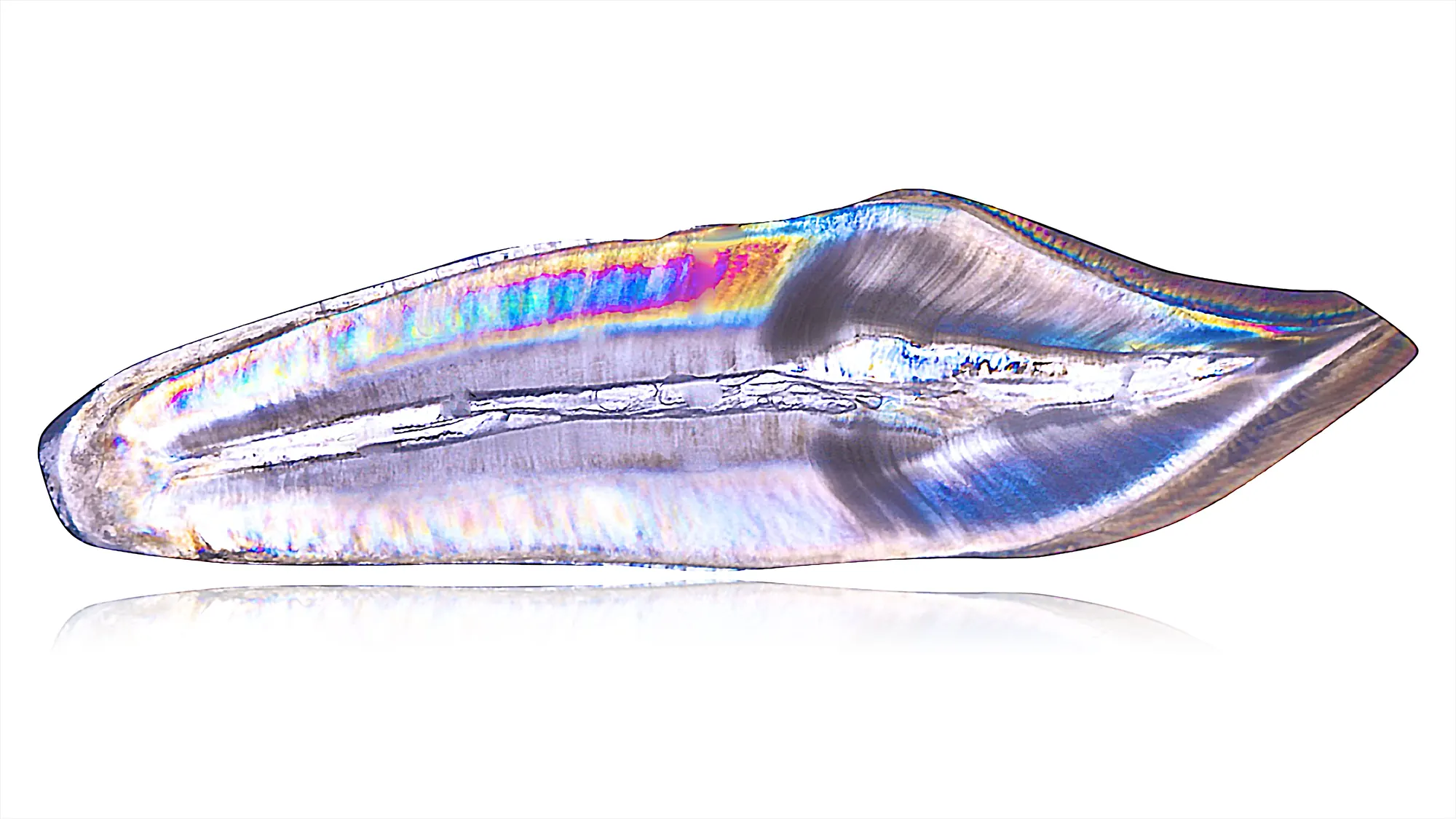
eLAB crowns — shade measured rather than remembered.
Most remakes are shade remakes. A shade tab held next to a tooth is read by eye, under whatever light the surgery happens to have, and then described in words to someone who never saw the patient.
We work from photographs instead. A cross-polarised photograph taken with a calibrated grey reference in frame removes the surface reflection and fixes the lighting, so the tooth's colour can be read consistently at the bench. It is the basis of the eLAB protocol, and it is why the first thing we ask for on an anterior case is a photograph.
That is what an eLAB crown is — a way of communicating shade, not a different kind of restoration. It applies to a veneer, a crown or a bridge alike, and it costs you a filter and a grey card.
If you have not shot cross-polarised before: tell us and we will walk you through what your camera needs. It is a filter and a grey card, not a new workflow.
What we work to, stated plainly.
If a case needs to move faster than this, say so when you send it — we would rather agree a date than miss one.
2 weeks
Standard
For a case of 6–8 units, excluding weekends.
7 days
Expedited · +20%
Agreed case by case, subject to the bench having room.
3 days
Urgent · +50%
For cases that genuinely cannot wait.
Questions we are asked first.
If the answer you need is not here, ring the bench — the number is at the foot of every page.
-
Two weeks for a 6–8 unit case, excluding weekends. If you need it sooner, expedited work is 7 days (+20%) and 3 days (+50%). Tell us the date when you send the case rather than after — we would rather agree a deadline than miss one.
-
Either. We take physical impressions and intraoral scans from the major systems, and the case is designed digitally from both. Which one you send makes no difference to how the case is built or to the turnaround.
-
An impression or a scan, an opposing model, a bite registration, and shade photographs. Implant cases also need the scan body or impression coping and the implant system and platform. If anything is missing we will tell you before we start rather than guess.
-
A cross-polarised photograph with a calibrated grey reference in the frame, which removes the surface reflection and fixes the lighting so the colour can be read at the bench. It is the basis of the eLAB protocol. If you have not shot cross-polarised before, say so and we will walk you through what your camera needs — it is a filter and a grey card, not a new workflow.
-
Yes. Every case is built by a named ceramist at our own bench in Liat Towers, and you can reach them while the case is in progress. Nothing is sent offshore and nothing is finished by someone you cannot reach.
-
Four stages, in sequence: trial smile, ideal wax-up, preparation with final temporaries, then the final restoration. The sequence exists because skipping a stage is what produces a remake, and we will say so if a case arrives out of order.
-
Yes, from Singapore and the region. Courier fees, local and international, are chargeable to the case.
-
New fees take effect accordingly, and we will tell you what they are before we begin the remake. Where the cause is something we can see on the model, we would rather find it at the bench than have you find it at the chair.
-
No. We are a business-to-business laboratory and we work only with dental practices. A patient needs a dentist, who then works with us. If you are a patient reading this, your own dentist can contact us at smile@ddaesthetics.com.sg.
The smile makeover protocol, in four stages.
The sequence exists because skipping a stage is what produces a remake. Full terms are on the terms page.
- 01
Trial smile
Agreed with the patient in the mouth before anything is prepared.
- 02
Ideal wax-up
The shape signed off in wax, so nothing is decided in ceramic.
- 03
Prep with temporaries
Preparation carried out to the agreed shape, with final temporaries.
- 04
Final restoration
Built to what was already approved, not to a fresh guess.